Label risk screening for food brands
Catch label risks before the border.
Every flag cites the Canadian rule and comes with a bilingual fix.
No card needed. Risk screening, not legal advice.
Built on Canada's published labelling rules: FDR (opens in a new tab)SFCR (opens in a new tab)CFIA Industry Labelling Tool (opens in a new tab). More markets coming soon. Independent; not endorsed by CFIA or Health Canada.
Facts about every check
- 2languages checked: English and French
- Jan 1, 2026"High in" symbol required on pack from this date
- 30 daysuntil label files are deleted, by default
Small gaps, big delays.
What one missed line can lead to.
- 1Held shipmentMissing French: relabel before it can sell.
- 2RecallUndeclared allergens can trigger one.
- 3RelabellingNo "High in" symbol: stickers or reprints.
Try it
Point at a problem, see the fix.
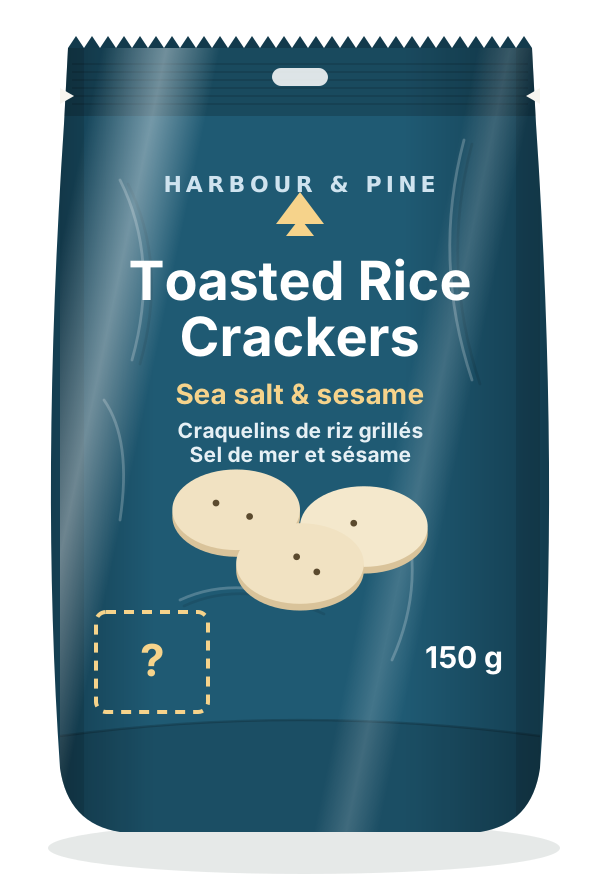
Pick a number on the pack or in the list.
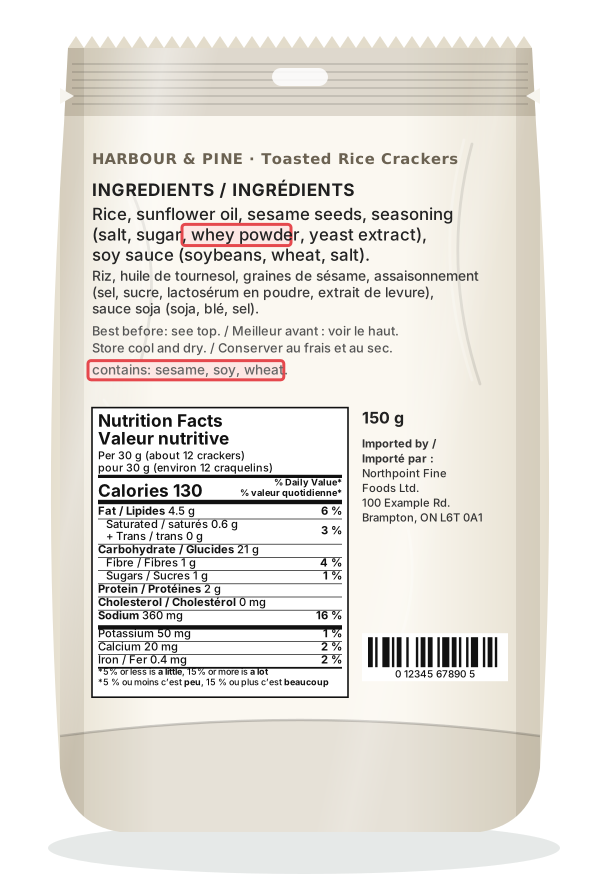
4 issues found
-
- Before
- Contains: Sesame, Soy, Wheat.
- After
- Contient : sésame, soja, blé.
-
- Before
- Contains: Sesame, Soy, Wheat.
- After
- Contains: Milk, Sesame, Soy, Wheat.
Source: FDR B.01.010.1(1), "food allergen" (f) (opens in a new tab)
-
- Before
- Front panel has no symbol.
- After
- Add "High in sodium / Élevé en sodium".
Symbol shown is illustrative.
-
- Before
- Ingredients… Best before… Contains: …
- After
- Ingredients… Contains: … right after.
- French "Contient" line added
- Milk declared for whey powder
- "High in sodium" symbol on the front
- Bold "Contains" right after ingredients
Every flag cites the rule
Every flag shows the fix.
Same ingredient list, before and after.
Before
Wheat flour, mustard oil, salt, spices, preservative (E223).
After
Wheat flour, mustard oil, salt, spices, preservative (sodium metabisulphite).
Contains: Wheat, Mustard, Sulphites.
1Mustard is a priority allergen. FDR B.01.010.1(1), "food allergen" (k) (opens in a new tab)
2E223 is a sulphite. FDR B.01.010.2(3) (opens in a new tab)
You decide. Your files stay yours.
Backfill flags and drafts. Your team signs off.
Review
- Accept or dismiss each flag
- A named reviewer signs off
- Exportable audit log
Privacy
- No model training on your files
- Deleted after 30 days by default
- Encrypted in transit and at rest
How it works
Three steps per label.
You upload. We do the checking.
rice-crackers-label.pdf EN + FR
File received
4 issues found
- No French "Contains" line
- Milk hidden in whey powder
- No "High in" symbol
- "Contains" set apart
Fixes drafted
Contains: Milk, Sesame, Soy, Wheat.
Contient : lait, sésame, soja, blé.
Manual review vs Backfill
Same label, two ways to check it.
| Aspect | Manual review | With Backfill |
|---|---|---|
| Rules | What the reviewer remembers | Same rules on every label |
| French | A second pass | Checked with the English |
| A problem | A note, then research | Cited section + drafted fix |
Why do imported labels run into trouble?
Canada names allergens, like sesame and mustard, that many markets don't, and labels need French too.
Does Backfill sign off my labels?
No. Your reviewer decides. The importer stays responsible.
How does the free trial work?
2 labels free, no card. Whole catalogue? Book an intro call (opens in a new tab).
What happens to my files?
Private, deleted after 30 days by default. Privacy policy.
Which rules do you cover?
Allergen, bilingual and front-of-pack rules in the Food and Drug Regulations, plus CFIA labelling guidance.
How accurate is it?
It's automated screening and can miss things. Every flag shows its source so your reviewer can check it.
Are you affiliated with CFIA?
No. Backfill is independent of CFIA and Health Canada.
See what's on your labels.
2 free scans. No card needed.